

Sabz Burj is a domed mausoleum at the Mathura Road–Lodhi Road intersection in Nizamuddin, New Delhi. Its Mughal-era architecture and restored exterior make it a notable stop near Humayun’s Tomb, though its position on a traffic island means you should plan your visit with care.
- Location: Mathura Road–Lodhi Road intersection, Nizamuddin.
- From Humayun’s Tomb: Sabz Burj stands west of the tomb.
- From Sunder Nursery: Western parking is near Subz Burj Circle.
Where Sabz Burj Is
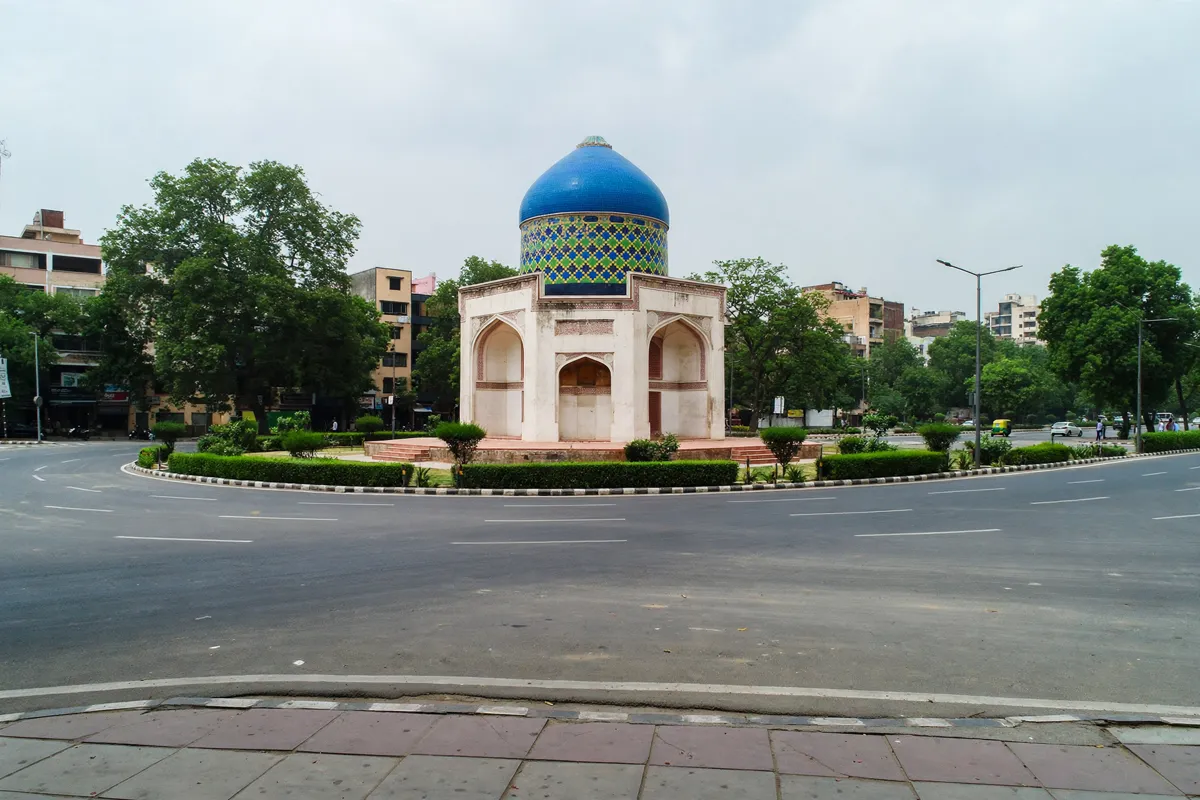
Sabz Burj stands on a traffic island at the Mathura Road–Lodhi Road junction in Nizamuddin, west of Humayun’s Tomb. It also marks the northeastern edge of the landscape around the Dargah of Hazrat Nizamuddin Auliya.
The monument lies in the buffer zone of the Humayun’s Tomb World Heritage Site. Its location makes it easy to place in a broader Nizamuddin heritage outing, but the busy junction is an important part of the visit: don’t assume that you can enter the monument or approach it across traffic.
What Is Known About Sabz Burj’s History
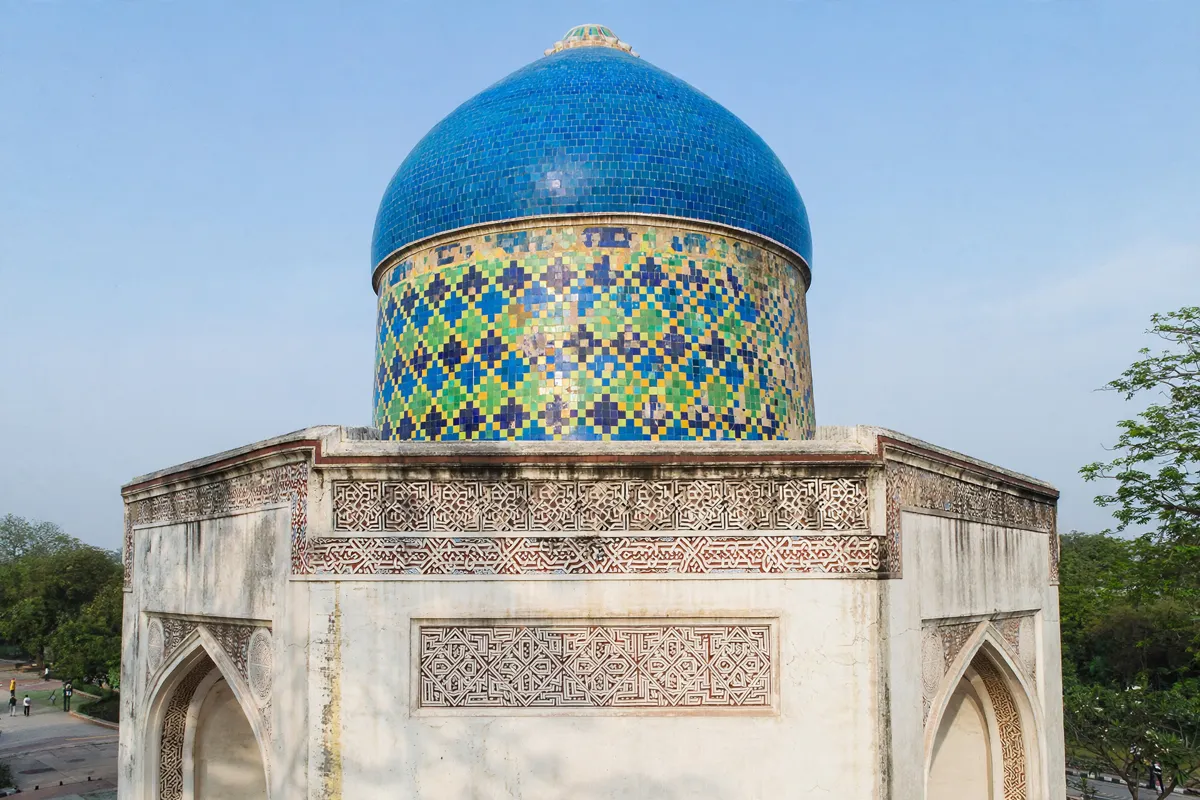
Sabz Burj has no inscription giving its date or identifying the person buried there, but its architectural style has been dated to the 1530s. A conservation flyer describes it as one of Delhi’s earliest Mughal-era monuments.
Its later use was less ceremonial. In the early 20th century, Sabz Burj served as a police station. By the 1980s, plaster had covered its painted interiors, façade decoration had been lost or hidden beneath cement, and tiles had fallen from the dome.
Architecture and Conservation
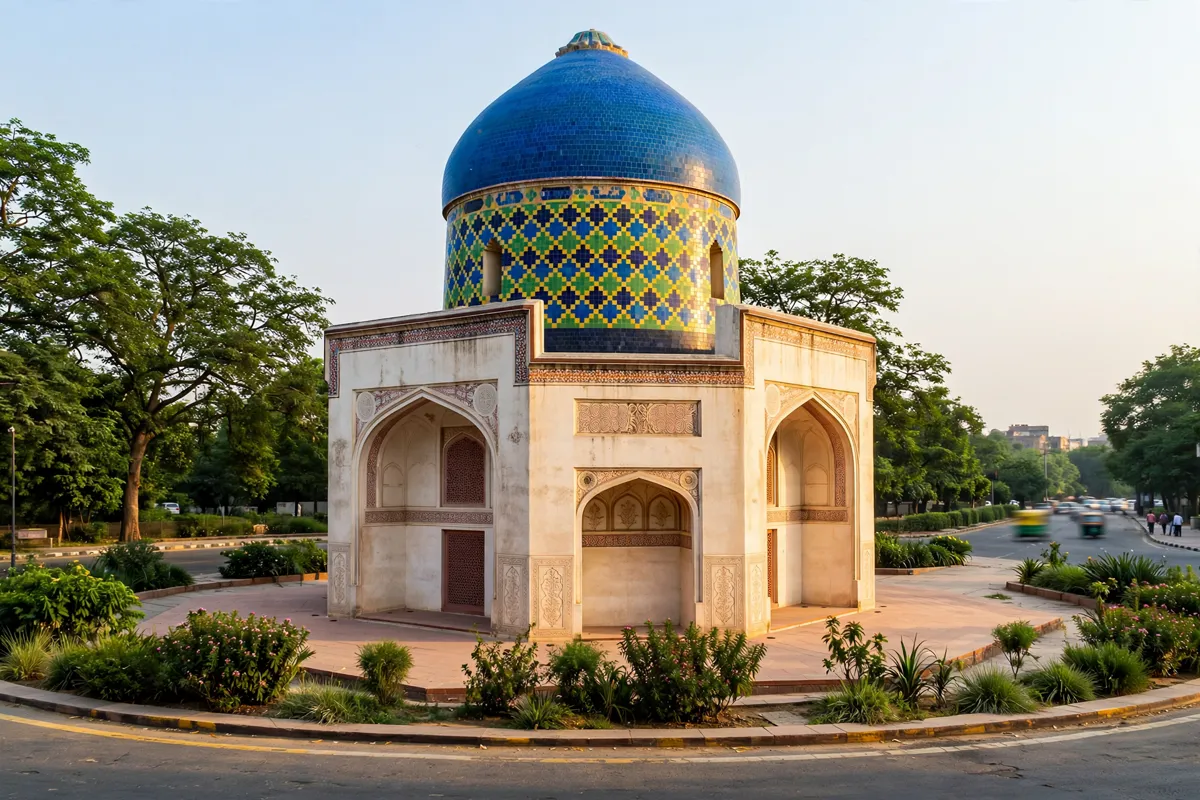
The octagonal mausoleum has a double dome set above a tall tiled drum. Its exterior combines geometric and interlacing patterns in incised plasterwork and tile, details that help distinguish the monument from a plain domed tomb.
Conservation work from 2017 to 2021 was carried out by an interdisciplinary Aga Khan Trust for Culture team under Archaeological Survey of India supervision, with support from Havells. The conservation account also describes surviving painted decoration on the interior ceiling, including patterns using gold and lapis.
Viewing Sabz Burj Respectfully
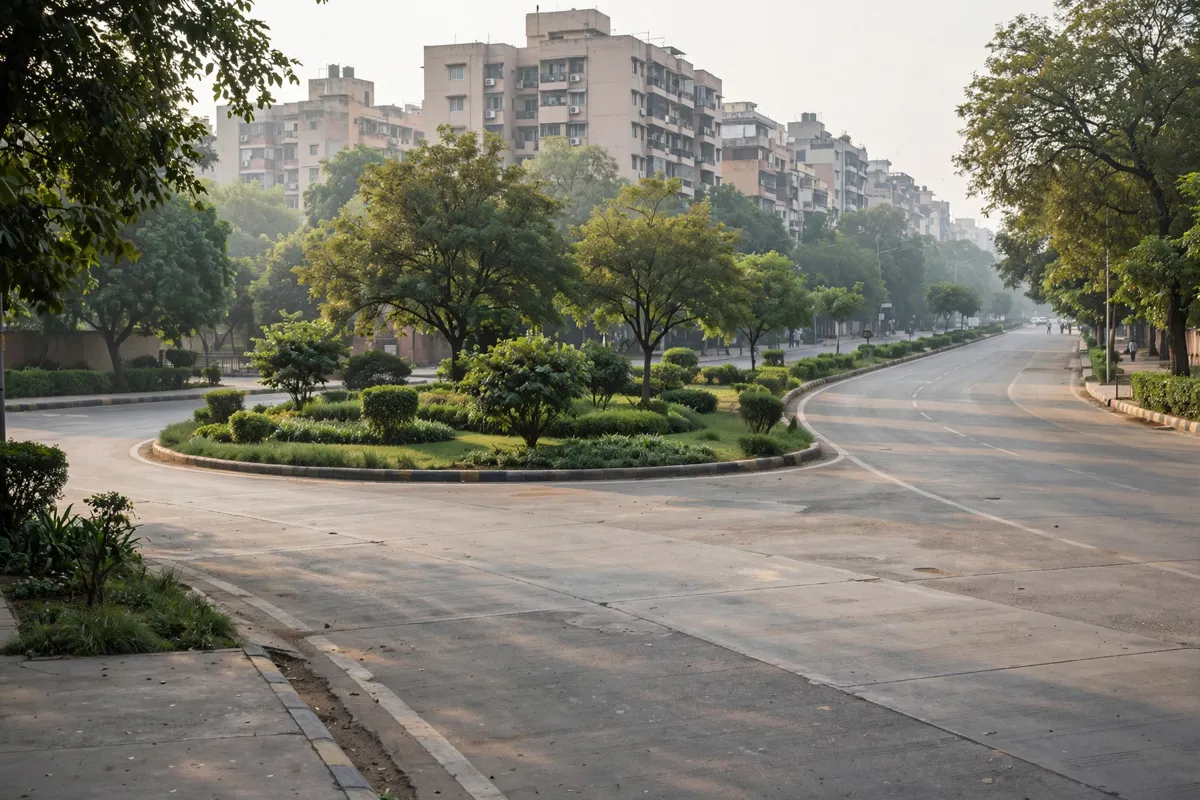
Because Sabz Burj stands on a traffic island at a busy road junction, plan to view it from outside and don’t cross traffic to approach it.
Sunder Nursery is close by, with its western parking near Subz Burj Circle. Summer hours run from 7:00am to 10:00pm from April to September, with last entry at 09:00pm. Admission costs Rs.50 for adults, Rs.25 for children aged 5 to 12, and Rs.200 for foreigners. Hours and prices can change, so check the official site before you go.
Pairing Sabz Burj with Nearby Sites
For a longer outing, Sunder Nursery’s World Heritage Sites Route passes Mirza Muazzafar Hussain’s Mausoleum, 16th-century Chota Batashewala, Mughal Mausoleum, Sunderwala Mahal, Sunder Burj and Lakkarwala Burj. The nursery is opposite the Humayun’s Tomb complex; cabs, buses and autorickshaws serve it, and Jawahar Lal Nehru Metro Station is a 10-minute drive away.
You can connect the monument with the area’s other landmarks using this short Nizamuddin heritage walk.
The Beaufort Inn is about a 16-minute walk from Sabz Burj; it is a three-star inn in New Delhi.
Humayun’s Tomb’s visitor details cover its tickets, hours and principal sights.
FAQs
Who is buried at Sabz Burj?
The identity of the person buried there is not recorded, and the monument bears no date.
What makes Sabz Burj’s architecture distinctive?
Its octagonal form, double dome, tall tiled drum and patterned exterior ornament set it apart. The surviving painted ceiling decoration is another notable feature.
Can you go inside Sabz Burj?
Don’t assume you can enter; seek official guidance before planning an interior visit.